Sunday Happy: A Versatile Display Font for Modern Design Projects
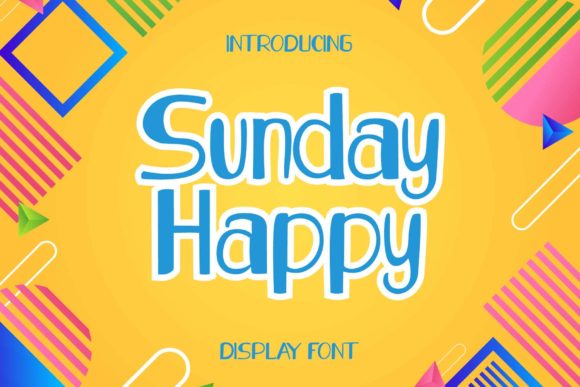
Sunday Happy is a display font that brings a sense of joy and playfulness to any design project. Its clean, rounded forms and friendly appearance make it a popular choice among designers looking to add a touch of warmth and approachability to their work. Whether you're creating branding materials, digital content, or print media, Sunday Happy offers a unique visual identity that stands out without overwhelming the viewer.
What Makes Sunday Happy Unique?
Sunday Happy is designed with simplicity in mind. The font features soft curves and balanced proportions that create a visually pleasing effect. Unlike more ornate or complex fonts, Sunday Happy maintains readability even at smaller sizes, making it suitable for both headings and body text in certain contexts. This versatility is one of its key strengths, allowing it to be used across a wide range of applications.
The font's name itself suggests a positive and uplifting mood, which aligns well with its visual characteristics. Its character shapes are reminiscent of hand-drawn lettering, giving it a personal and human feel. This makes Sunday Happy particularly effective for projects that aim to convey a sense of community, fun, or creativity.
Comparing Sunday Happy with Similar Fonts
When evaluating Sunday Happy against other display fonts, it's important to consider the specific needs of your design project. Fonts like Quicksand, Montserrat, and Raleway are also known for their clean and modern aesthetics. However, these fonts tend to have a more neutral tone compared to Sunday Happy, which adds a distinct emotional nuance.
If your goal is to create a design that feels warm and inviting, Sunday Happy may be a better fit than more formal or minimalist alternatives. It's also worth noting that while fonts like Comic Sans MS share a similar playful vibe, they often come with a negative connotation due to overuse in informal settings. Sunday Happy avoids this by maintaining a professional yet approachable appearance.
Strengths and Tradeoffs
One of the main advantages of Sunday Happy is its adaptability. It can be paired with a variety of other fonts, from sans-serif to serif styles, without clashing. This makes it an excellent choice for multi-font layouts where consistency and harmony are essential.
However, there are some limitations to consider. Because Sunday Happy is primarily a display font, it may not be the best option for long-form text. In such cases, using it for headings or subheadings while relying on a more legible font for body copy is recommended.
Another consideration is the availability of weights and styles. While Sunday Happy comes in several variations, including regular, bold, and italic, it may not offer the same level of customization as some premium font families. This could be a factor if you're working on a project that requires extensive typographic variation.
Best-Fit Situations for Sunday Happy
Sunday Happy shines in situations where a friendly and welcoming tone is desired. It's particularly well-suited for:
- Branding and logos – The font's cheerful appearance can help establish a brand personality that is relatable and engaging.
- Marketing materials – From flyers to social media posts, Sunday Happy can add a visual boost that draws attention and encourages interaction.
- Children's products and educational materials – Its playful nature aligns well with themes that appeal to younger audiences.
- Event invitations and announcements – The font's upbeat style can enhance the excitement and positivity associated with special occasions.
In contrast, if your project requires a more serious or sophisticated look, you might want to explore other options that offer a broader range of stylistic choices. For example, fonts like Garamond or Times New Roman are better suited for academic or formal documents.
How to Use Sunday Happy Effectively
To get the most out of Sunday Happy, it's important to use it in ways that complement your overall design. Here are a few tips to help you integrate the font into your projects:
- Limit usage to key elements – Since Sunday Happy is a display font, it should be used sparingly to avoid overwhelming the reader. Focus on using it for headlines, titles, or call-to-action buttons.
- Pair with complementary fonts – Combining Sunday Happy with a more traditional or structured font can create a balanced and visually appealing layout.
- Experiment with spacing and alignment – Playing with letter spacing and line height can enhance the font's readability and aesthetic appeal.
- Consider color and background – The font's appearance can be affected by the colors and backgrounds used in your design. Choose combinations that ensure good contrast and legibility.
By following these guidelines, you can ensure that Sunday Happy enhances your design rather than detracting from it.
When to Consider Alternatives
While Sunday Happy is a versatile and expressive font, it may not be the best choice for every situation. If your project requires a more formal or technical tone, you might want to consider alternatives that offer a wider range of styles and weights.
Additionally, if you're working on a design that involves a lot of text, it's important to choose a font that is optimized for readability. Sunday Happy, while readable in many contexts, may not be the best option for long passages of text.
In such cases, pairing Sunday Happy with a more traditional font for body copy can help maintain a balance between visual interest and readability. This approach allows you to enjoy the benefits of Sunday Happy without compromising the overall effectiveness of your design.
Ultimately, the decision to use Sunday Happy will depend on the specific goals and requirements of your project. By understanding its strengths and limitations, you can make an informed choice that best serves your design needs.